A timely problem, a proactive plan, and a timeless purpose for education independence.
Abstract
This essay explains why the ark is the right metaphor for education independence. It argues that the present educational moment poses a timely problem, calls for proactive planning and preparation before the storm, and serves the timeless purpose of preserving the conditions for truth, goodness, and beauty.
I. Introduction
This installment answers a simple but important question: why have we chosen the metaphor of an ark?
Those committed to homeschooling or educational freedom are often accused of withdrawal, as though stepping outside the government education system means turning away from the wider world. This simply is not true. Those in the education independence movement care for all students and are proactively working to build spaces that offer growth, refuge, and continuity.
The ark metaphor beautifully embodies education independence work, since it addresses a timely problem, requires a proactive plan, and serves a timeless purpose.
II. A Timely Problem
In Noah’s day, there was a serious problem. Scripture tells us that “the wickedness of man was great in the earth,” and that “every imagination of the thoughts of his heart was only evil continually” (Genesis 6:5 [KJV]). Evil had captured the thoughts and hearts of man, and the earth was filled with violence. This story paints a narrative: a totality of corruption embedded in all the people of the world.
The situation looked hopeless, but God provided a way of escape when He instructed Noah to build a massive ark. And build an ark he did.
Our moment is not Noah’s day, and we are not anticipating another flood. But Noah’s story still gives us a useful comparison.
In Noah’s day, the thoughts and hearts of individuals had been captured by evil. In our day, we still face that inward capture, but we are also facing another kind: the state capture of institutions that shape society.
The parallel is not the coming judgment by water, but the reality that capture has consequences. Noah’s story helps us see the problem clearly and consider where its path leads.
The Government Experiment
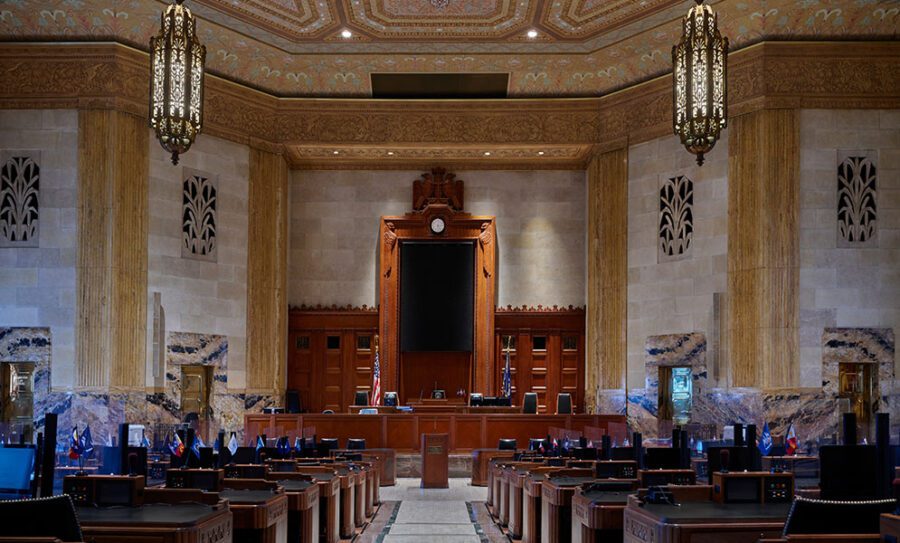
The government education experiment has reached a stage of maturity at which we can see that we have a serious problem: academic success has declined (National Assessment of Educational Progress), sexual abuse is widespread (Shakeshaft, United States Department of Education), and the institution of the family has been weakened. The family has been weakened because the state has increasingly assumed one of the family’s central duties: the formation of children. As society accepts government education as the default, it disparages parents as primary directors and recasts them as participants in a state-run system, despite long-standing recognition that “the child is not the mere creature of the state” (Pierce v. Society of Sisters, 1925). Over time, parents become increasingly disenfranchised as their God-given role is usurped and treated as insufficient, weakening both their confidence and influence.
The state has consolidated authority over the forms and content to the extent that it has become the largest and most powerful societal-shaping institution. At the current rate, roughly 90% of American children are funneled through this system (National Center for Education Statistics). A quantity that approaches totality in both reach and depth, government education now extends beyond academics into areas such as social-emotional formation, as well as practical provisions like extended hours and meals. What was once criticized as a “nanny state” has, in effect, become the primary mechanism through which the majority of children are raised. As Proverbs reminds us, when children are trained in a particular way, they carry it forward. Society itself is shaped through its means of formation, and today, that means is the government education system.
The True, Good, and Beautiful
Education captures society because it shapes thoughts and hearts. As education is increasingly directed by centralized authority in both form and content, society is increasingly shaped by those interests. And when education is captured, society loses the freedom to wrestle with truth, and families and individuals can lose sight of the sobering reality that they hold the responsibility to contend for what is true, good, and beautiful.
So many agree about the severity of the moment. The popularity of school choice itself is evidence that many people sense the gravity of the problem. Even those who differ on solutions increasingly recognize that the current educational system poses a serious threat to the future of a free society.
In Noah’s day, evil captured the thoughts and hearts of man. Today, while we still wrestle against that same inward capture, we are also witnessing something more structured. We are seeing institutional capture.
When education is held and directed by the state, the formation of the next generation is no longer fully free. The thoughts and hearts of children are shaped within boundaries set by centralized authority, rather than guided primarily by families and the private and charitable sector.
As a result, the next generation is less free to pursue truth, goodness, and beauty wherever they may be found. Instead, they are pressed into government-approved forms. That is why the problem is timely. The capture already exists.
III. A Proactive Plan
The ark was not a reaction. It required a plan.
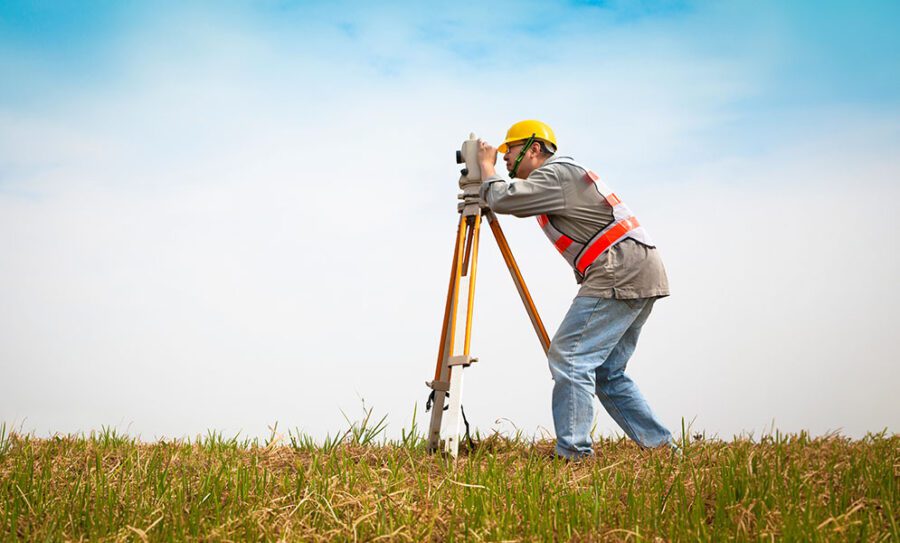
Noah did not build in reaction to the flood, but in preparation for it, before the necessity was universally recognized. A plan was required precisely because the rain had not started. (See: Genesis, chapters 5–9.)
That plan was not built on exhaustive knowledge. Noah didn’t know everything about everything. But he knew enough; He knew what God had told him. The work required obedience and readiness, not total foresight. A proactive plan does not depend on knowing everything in advance. It depends on being responsible for what you do know and preparing faithfully for what may come.
The ark was not built only to endure the storm, but to receive and preserve life within it. It had to be ready not only for Noah and his family, but also for all the animals that God would bring to Noah. Some may say that this is where the metaphor breaks down, because while Noah was preparing to receive animals, we have the joy of preparing for precious families. However, we can relate to Noah’s possible feelings of uncertainty. What we are building cannot be limited to those who are already “here” and already see the need. It must be prepared for those who will come when the consequences of capture become more visible.
Prepared for Those Not Yet Here
This requires a particular kind of plan. Not one held tightly, but with open hands, ready to make room for those God may bring. A plan that cannot expand will not be able to receive what it was meant to hold.
Education independence requires this kind of proactive planning. We are not building in response to a fully realized collapse, but in recognition of what is already underway. We do not know the full number of those who will seek refuge. We cannot predict every need that will arise. We CAN accept the responsibility to dream big and prepare.
The ark is the right metaphor because it requires a plan before the storm, not after it.
IV. A Timeless Purpose
The ark was not built merely to survive a storm. It was built to preserve life.
As we already noted, Noah did not build the ark as a reaction, but rather in preparation, before the necessity for such a structure was universally recognized. A plan was required precisely because the storm had not yet fully arrived.
The ark did not preserve everything. It preserved what was necessary for life to endure. To build an ark is to decide what must be carried forward, not for the sake of the present moment alone, but for what will follow it.
This is where the metaphor matters most. What we are building is not merely a response to what is broken, nor merely a plan for what may come. It is the preservation of the conditions that make the pursuit of truth, goodness, and beauty possible within a society of healthy families.
As G.K. Chesterton observed, “Education is simply the soul of a society as it passes from one generation to another.” If that is true, then education independence, rightly understood, is not only an act of separation. It is also an act of preservation. It seeks to protect and carry forward the patterns of formation, the habits of thought, and the structures of learning that allow truth to be pursued, goodness to be recognized, and beauty to be cultivated.
What is preserved in one generation becomes the inheritance of the next. If the conditions that make flourishing possible are not carried forward, they do not remain available by default. They must be maintained, strengthened, and handed down.
The ark is the right metaphor because it exists not only for survival, but also for the preservation and continuation of life beyond the storm.
V. Conclusion
We face a timely problem that cannot be ignored without consequence. That reality calls for a proactive plan, not panic, and for a timeless purpose, not mere survival. What must be built now is not simply an alternative to what is failing, but a faithful means of preserving and carrying forward what is true, good, and beautiful.
That is the invitation before us. We must reflect honestly on what is being formed in our children, in our communities, and in our society. Then we must act with courage and responsibility, building spaces strong enough to preserve the conditions for human flourishing, make room for growth, and carry forward an inheritance worth receiving.
Written by: