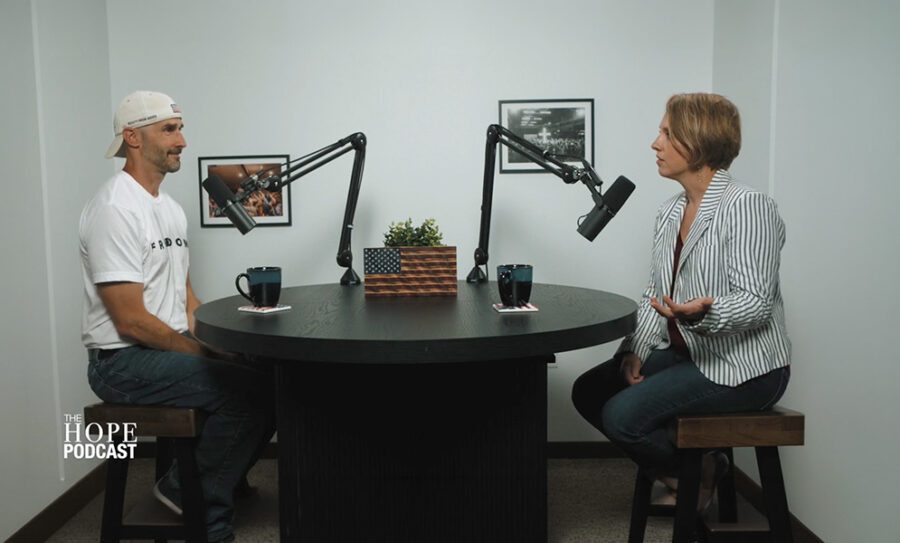
Just days before America marked 250 years since the signing of the Declaration of Independence, Lauren Gideon, Director of Government Relations for Education Independence, A Classical Conversations Initiative, sat down with Leo Kelly of the Hope Podcast for a conversation that puts that founding document back where it belongs: not on the shelf as an antique, but in our hands as a working blueprint.
What defines an American? Lauren’s answer starts with the words many can recite but few have wrestled with: “We hold these truths to be self-evident.” From there, the conversation ranges across history, theology, and the state of education today.
A Conversation 250 Years in the Making
Lauren explains why the founders understood their document as a legal declaration of breached contract and why that distinction still matters for how we engage our government today.
The academic rigor and spiritual discipline that built this country predate government education entirely. Lauren traces the surprising origin story of compulsory schooling, from a failed commune in Indiana to the Prussian Empire to the man whose own children never attended the state schools he championed.
Every education disciples a child into some paradigm. Lauren follows that premise to its uncomfortable conclusion and asks what it means for how we fund and attend schools in a nation that promised the mind would remain free.
Lauren offers a warning school-choice advocates need to hear: families who had already built genuine independence are being drawn back into dependency programs. Her reframe of the whole debate? We don’t have a funding problem. We have an imagination problem.
The Four Pillars, in Conversation
Listeners familiar with Education Independence will recognize the heartbeat of this episode. The conversation moves through all four of our pillars:
- Independent Parents — Parents, not the state, hold primary authority over their children’s education.
- Independent Funding — Whoever funds education owns it; families who fund privately retain full ownership of their children’s education.
- Independent Pursuits — Families freely choose their educational path without state-imposed barriers.
- Independent Ideas — The content and convictions of a child’s education belong to the family.
It is a picture of what advocacy sounds like when it is rooted in first principles rather than political convenience.
Watch and Share
Watch Lauren talk Education Independence with Leo on the Hope Podcast, then share it with a friend who is asking the same questions.
If this conversation resonates with you, join the Education Independence network to keep wrestling with these ideas alongside us. Truth doesn’t change, and 250 years later, these principles are still worth defending.